Abeer Farooqui
Senior Executive-Programs at RQ Science & Technology

All about exploring and expanding the boundaries of human potential, with 8+ years of experience researching learning models, studying individual and aggregate strengths & gaps and...
Show More
- Learning and Development Strategies: Techniques for effective talent development
- Project Management Fundamentals: Skills for managing complex projects effectively
- Women Empowerment in Leadership: Fostering female leadership and career advancement
- Innovative Learning Models: Exploring new trends in education and training
- Coaching and Mentorship: Key methods for effective coaching and support.
Meet the mentor
Tricky Workplace Situation Handled
- For my organization, change is a necessary part of our fabric, as we are in the business of learning & development. Still, we struggle, because we must continually tweak our infrastructure to support agility. Change for us means responding quickly to our customers' feedback and making needed changes to our offerings, and it means changing the way we do business depending on evolving local and international needs. We practice detachment to our "set plans" and instead try to practice agility, drilling into our relationships with our peers, superiors as well as our external partners. With the pandemic, it has become necessary to adapt.

- I will check if my business plan and methodology are still relevant according to the current external environment. I will be careful not to fall into complacency, if I have in the past gained a reputation as a pioneer in my industry, or have seen success with existing methods in the past. The case of Nokia, IBM, Kodak should be warning enough to understand that we must always, always review and look outwards. I would look at what my competitors are doing well, and what this tells me about the market, and the consumer. I will adapt the current plan to fit the new needs that have emerged, and make it my business to make sure adapting our plans is as routine as quarterly budgeting practices.

- No, this is not. It disregards the very nature of business and society today. New ideas are not bonuses, they are necessary for survival in the modern economy. Companies must keep innovating and advancing in order to stay relevant, and to stay ahead of their competitors.

- One of the largest experiences that drive home the importance of adaptability and navigating change is the pandemic. For any individual or business, this is the largest practice and case study for the necessity and methodology for rapid, transformational change. You sometimes learn about the need to change through radical shifts that happen, making change the only choice. once you see that you need to create agile organizations as a method of managing risk and ensuring survival, you begin to practice change management as a lifestyle, instead of a "cross the bridge when we come to it" approach.

- The leaders display positive qualities that are essential to leadership, such as being a team-player, dissolving hierarchy where appropriate, and recognizing and appreciating staff. I apologize as I can't quite properly view/discern the dynamic in the last image.
- The one characteristic I find the hardest to redeem in appointed leaders is a lack of integrity. The thing about tough or difficult bosses is that you can still trust them to be who they are. Even if it's hard to work with them, they're authentic to who they are. You understand, and often respect their standards. For new age, modern bosses, who are more inclusive and problem-solving in their approach, who also display authenticity, the benefits to team culture are exponential. However, bosses who put on facades, display conflicting or inconsistent values are the hardest to deal with, because for me, trust is the #1 factor for any healthy, positive relationship.

- It is a new LMS, there are bound to be errors in any sort of a pilot, so Jack needs to make sure this message resonates with his team. If he is a boss that promotes experimentation and innovation, two cultural themes you would assume to be important for effective L&D, then he needs to remind his team that experiments require consistent reviews and amendments. And that feedback, ultimately, is a gift. The next step would be to collect and analyze all the feedback, and to energize the team by brainstorming solutions and creating action plans. The goal is to minimize the issues, and to make sure there are both corrective and precautionary measures going into each new iteration.
- I would always encourage to focus on their individuality. The best leaders to me have always been those who truly embody who they are and their values, and I try to practice authenticity myself every day. To practice authenticity, the first thing I would prescribe is to "know thyself". Introspect. A lot. Understand your values. Write them down. Use them as guides and navigators in your decisions. People are drawn naturally to people who vibrate with authenticity. This is how you lead by example: by understanding who you are and leading with your values.

- because I'm not trying to be. All I need to be is the fullest version of myself.
- to take charge, to express, to have my voice resonate in every space I occupy.
- others as I lead myself, with empathy, autonomy and a drive for growth.
- trust my instincts to steer me in the right direction
- to recognize my fears, without letting them limit me.
- Yes, these are affirmations I flip through on a regular basis
- Being human, embracing our human-ness, that was the most important lesson from the video for me as it deeply resonates. It's like when you're able to accept as a grown-up child, that your parents are humans and can make mistakes, and how relatable it makes them. This should be the way we look at our own leadership styles. We need to dare to say the truth, share our concerns, rope in experts to solve problems we can't solve on our own - all of this takes a reframing of ourselves, and how we view our egos. We are not less if we show skin/vulnerability. We are courageous for doing so. And we are finally being real.

- are led by perceptions
- are led by their values

- I would take a small respite to reflect. I would need to disconnect from the immediacy of my triggered fears and emotions, and take stock. I would take stock of two things: one, I would look at all the things I have accomplished that I am proud of. It is needed if I am to move forward with determination. Second, I would look at all the ways I could have made mistakes, could have made better decisions, and I would accept it, and dissolve the urges to act out or assign blame outside of myself. Then, I would create action plans, short-term and long-term, and set KPIs for myself, and propose these KPIs to my CEO for alignment. Then, I would put all my energy in proving that I am able to do all the things I believe I can, and that I have,
202082143036.jpg)
- I would strongly encourage all leaders to practice taking feedback gracefully. This is something that only comes with practice. I would also strongly encourage leaders to prioritize mental well-being practices for resilience, that leads to sustained confidence. Meditation, affirmations, and having notes of our proudest moments can help raise our spirits and motivation in times when our confidence takes a hit. Our ability to overcome past hurdles is the strongest promise that we can do it once again.

- B. Inclusive recruitment involves connecting with, interviewing, and hiring a diverse set of persons through understanding and valuing different backgrounds and opinions.
- Conformity bias
- Beauty bias
- Conformity bias
- Confirmation bias
- Horn effect
- Halo effect
- Similarity attraction bias

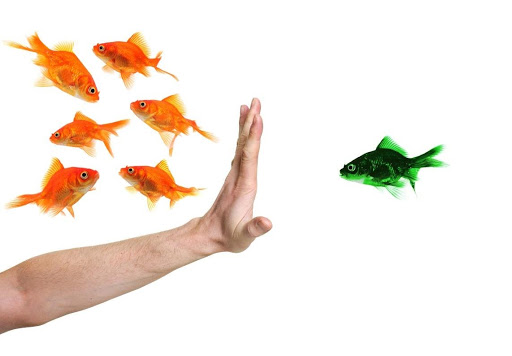
- I'd be most prone to similarity bias, and confirmation bias, because I personally need to actively and routinely overcome uneasiness with change, so I might be more inclined to hire people who would "fit" well with existing culture or are similar to me unconsciously instead of people who would come and "shake things up". In a world of first impressions, the Horn effect might also play a large influence on me

- Are there new ideas coming routinely? Where are the majority of ideas coming from? Are we routinely facing the same challenges? Are we stuck? Are we too comfortable? Are people disagreeing with each other often enough?

- 1) Make decisions based on objective data from multiple sources i.e resume, references, interview. 2)Have "blind skills challenges" i.e build assessments based on needed job competencies and send to all candidates, and make a decision based on scores, not profiles 3) have clear structure/ criteria for evaluating interviews and applications

- I would share my experience of living in and working in one of the most diverse countries on the planet, like Dubai, and how respect is key to living in harmony in a community and thriving by leveraging differences. Personally, as a 3rd culture kid, I've learnt to create a perfect version of my world, where I take what I love from all the cultures I'm exposed to in order to live my authentic self